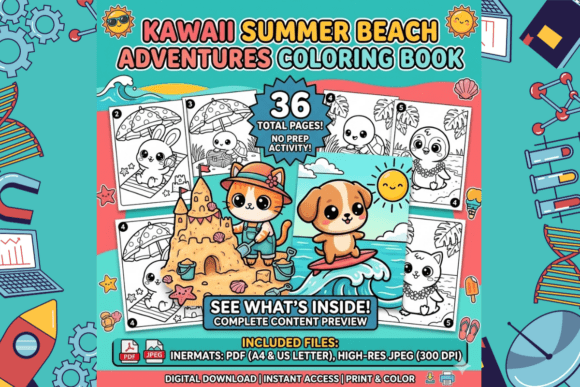
Spring Kawaii Coloring Pages for KIDS: Why This Niche Content Is Reshaping Children’s Publishing
In the rapidly evolving landscape of children’s digital and print content, few categories have demonstrated as much staying power and growth potential as seasonal coloring pages. Among these, Spring Kawaii Coloring Pages for KIDS represent more than just a cute pastime—they are a strategic asset for entrepreneurs, content creators, freelance designers, and self-publishers navigating the Kindle Direct Publishing (KDP) ecosystem. As the demand for high-quality, ready-to-print, and customizable children’s activities continues to surge, understanding what makes this specific product category valuable is essential for anyone looking to build a sustainable creative business.
This article explores the mechanics behind Spring Kawaii Coloring Pages for KIDS, why it resonates with modern audiences, how it fits into broader market trends, and what professionals should consider when incorporating such assets into their workflow. Whether you are a KDP publisher scaling your catalog, a freelance illustrator diversifying your portfolio, or a marketer building seasonal campaigns, the insights here will help you evaluate the role of thematic coloring content in a competitive digital marketplace.
The Rise of Seasonal Niche Content in Self-Publishing
The self-publishing industry, particularly through platforms like Amazon KDP, has experienced a paradigm shift over the past decade. Where once generic coloring books dominated the shelves, today’s most successful publishers rely on niche, seasonal, and culturally relevant themes to capture attention. Spring Kawaii Coloring Pages for KIDS exemplifies this shift by combining two powerful consumer magnets: the universal appeal of springtime renewal and the emotionally resonant kawaii aesthetic.
Kawaii, a Japanese term meaning “cute” or “adorable,” has transcended its origins to become a global design language. For children, kawaii characters—often featuring rounded shapes, soft expressions, and bright pastel colors—create an immediate emotional connection. When paired with spring motifs such as blooming flowers, butterflies, rainbows, chicks, and cherry blossoms, the result is a visually cohesive experience that feels both fresh and familiar. Publishers who understand this intersection of seasonal timing and aesthetic preference are better positioned to generate consistent sales cycles year after year.
From a business perspective, seasonal content offers a predictable revenue stream. Consumers search for spring-themed activities in late winter and early spring, making Spring Kawaii Coloring Pages for KIDS a timely product that aligns with natural purchasing behavior. Unlike evergreen content that competes year-round, seasonal assets benefit from concentrated demand windows, allowing creators to optimize advertising budgets and launch strategies around specific dates.
Why the Kawaii Aesthetic Matters for Children’s Engagement
The cognitive and emotional development of children is deeply influenced by the visual stimuli they encounter. Kawaii design principles—simplicity, warmth, and expressiveness—are not arbitrary; they are rooted in how young minds process information. Spring Kawaii Coloring Pages for KIDS leverage these principles to create coloring experiences that are both accessible and rewarding for early learners.
When a child encounters a kawaii-style bunny holding a tulip or a smiling sun with rosy cheeks, the visual cues are immediately interpretable. There is no complex shading, no intimidating realism—just clear lines and friendly faces that invite participation. This lowers the barrier to creative expression, especially for children who may feel frustrated by overly detailed illustrations. For educators and parents, this means less supervision and more independent engagement, a practical benefit that drives repeat purchases and positive reviews.
Moreover, the kawaii aesthetic supports a growth mindset. Because the characters are inherently cheerful and non-judgmental, children are more likely to experiment with color choices without fear of “making mistakes.” This aligns with modern educational philosophies that prioritize process over product. For the KDP publisher, this translates into content that performs well not only in the coloring book category but also in broader searches related to early childhood development, mindfulness for kids, and creative play.
The Changing Needs of Digital-First Creators
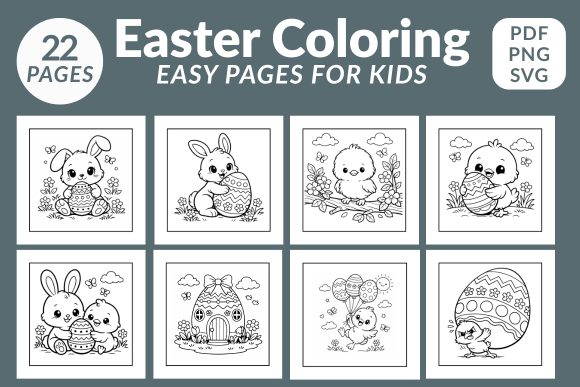
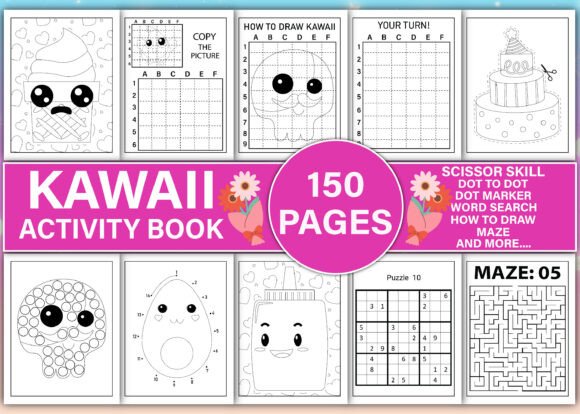
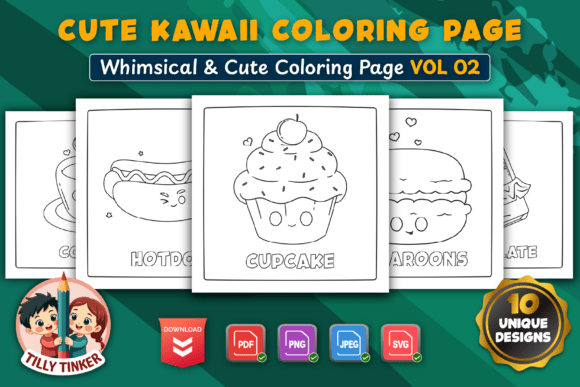
One of the most significant trends shaping the content creation industry is the expectation of versatility. A single product is no longer judged solely on its printed output; it is evaluated by how adaptable it is across multiple formats and platforms. This is precisely where the Spring Kawaii Coloring Pages for KIDS product structure excels. The inclusion of AI, EPS, SVG, PDF, PNG, and JPG files—across 30 distinct pages plus a cover—reflects a deep understanding of modern creator workflows.
For freelance designers and small studios, the ability to receive a zip file containing both editable source files (AI, EPS, SVG) and ready-to-use raster formats (PNG, JPG, PDF) eliminates hours of conversion work. A designer can open the AI file in Adobe Illustrator to adjust line weights, recolor elements, or combine pages into a new layout. An SVG file allows for further customization in web or app-based projects. Meanwhile, the high-resolution PNG and JPG images are immediately usable for print-on-demand services, social media teasers, or email marketing assets.
Entrepreneurs who sell digital products on platforms like Etsy, Gumroad, or their own websites find this format particularly valuable. They can offer the same Spring Kawaii Coloring Pages for KIDS as a digital download in multiple configurations—a full PDF book, individual JPG prints, or an SVG bundle for crafters who use cutting machines. This flexibility maximizes the lifetime value of a single content asset and appeals to a broader audience with varying technical capabilities.
High-Resolution Assets and the Expectation of Quality
The specification of A4 size (8.5″ x 11″ inches) with high-resolution interiors is not a minor detail—it is a baseline expectation in today’s market. Consumers accustomed to professional-grade content will quickly abandon products that appear pixelated, stretched, or poorly formatted. The Spring Kawaii Coloring Pages for KIDS product addresses this by ensuring that each of the 30 pages—plus the cover—is rendered at a resolution suitable for both home printing and commercial reproduction.
For KDP publishers specifically, file quality directly affects the buy box, royalty rates, and customer satisfaction. Amazon’s print-on-demand system requires that interiors meet specific DPI and margin standards. A product that includes a 32-page PDF with properly bleeds and trim marks reduces the risk of returns and negative feedback. Similarly, the inclusion of a separate PDF file for the full interior allows publishers to upload directly to KDP without additional assembly, streamlining the path from asset acquisition to live listing.
Beyond print, high-resolution PNG and JPG files enable creators to use the same illustrations across multiple touchpoints. A marketer building a spring campaign for a children’s brand might use a kawaii butterfly from the set in an email newsletter, a social media post, and a downloadable activity sheet—all from the same source. This coherence strengthens brand identity and reduces the cost of creating original artwork for each channel.
The Strategic Advantage of 30+ Unique Pages
A common pitfall in children’s content production is the creation of repetitive or filler pages that diminish the user experience. A 32-page book with 30 unique pages plus a cover page and perhaps a title or copyright page offers substantial value without unnecessary padding. Each page in the Spring Kawaii Coloring Pages for KIDS collection is a distinct illustration, providing variety that sustains a child’s interest over multiple sessions.
For the creator, having 30 distinct assets means the ability to sample the content strategically. A KDP publisher can include a handful of pages in the “Look Inside” preview to showcase the variety, increasing conversion rates. A blogger or influencer can share different pages across a series of posts, building anticipation for the full book. An educator can print a selection of pages for classroom use and save the rest for homework or free-time activities. The 30-page structure, therefore, is not just a quantity metric—it is a distribution and marketing asset in itself.
Navigating File Formats and Technical Requirements
It is important for professionals to understand the technical landscape before purchasing or using such a product. The product explicitly notes that a computer is required to unzip the files, and that a design or editing program supporting AI, SVG, EPS, PDF, PNG, or JPG formats is necessary. This is a honest and practical caveat that speaks directly to the target audience of creators who already work with vector and raster graphics.
For those new to these formats, the learning curve is manageable. AI and EPS are vector formats best opened in Adobe Illustrator or compatible software like Affinity Designer or CorelDRAW. SVG files can be edited in a range of free tools such as Inkscape or even basic text editors for simple adjustments. PDF is the most universally accessible format, suitable for both print and digital distribution. PNG and JPG are standard raster formats that require no special software beyond basic image viewers or editors like Photoshop, GIMP, or Canva.
The inclusion of both AI and EPS source files demonstrates attention to industry standards. While AI is Adobe-specific, EPS is a more universal vector format that many legacy and cross-platform workflows still rely on. Providing both ensures compatibility across different software ecosystems, which is a consideration that experienced creators will recognize and appreciate.
Connecting to Broader Trends in Digital Publishing
The success of Spring Kawaii Coloring Pages for KIDS cannot be understood in isolation. It is part of a larger movement toward asset-based publishing, where creators assemble, curate, and package existing content rather than producing everything from scratch. This model reduces time-to-market and allows individuals with design skills but limited writing or marketing expertise to participate in the KDP ecosystem.
Additionally, the rise of print-on-demand has lowered the financial risk of publishing. There are no inventory costs, no minimum order quantities, and no upfront storage fees. A KDP publisher can upload a polished PDF of spring kawaii pages and have it available for sale within hours. If the product does not perform, there is no loss beyond the time invested. If it succeeds, the margins can be significant due to the low cost of digital assets.
For marketers, the kawaii spring theme offers a rare opportunity to align with seasonal emotions. Spring is associated with growth, renewal, and joy—emotions that parents want to cultivate in their children. Products that deliver on these emotional promises without requiring additional effort from the adult (no prep, no complicated instructions, no cleanup) are highly valued. The kawaii aesthetic amplifies this by adding an element of whimsy that appeals to adults as well, making the product suitable for gift purchases and impulse buys.
Practical Observations for Entrepreneurs and Creators
If you are considering adding Spring Kawaii Coloring Pages for KIDS to your product lineup or using them as a content foundation, there are several practical strategies to maximize their impact. First, consider bundling the PDF with complementary assets—such as a set of spring stickers, a mini activity book, or a parent guide—to increase perceived value and average order value. Second, use the JPG files to create social media content that previews the pages. A time-lapse video of a child coloring one of the kawaii characters can generate organic engagement and clicks to your product page.
For freelancers, offering custom variations of the source files can be a lucrative service. A client may want a set of spring kawaii pages with their brand’s mascot integrated into the illustrations. Having editable AI and SVG files makes such customizations feasible in a fraction of the time it would take to create new artwork from scratch. This positions you as a value-added partner rather than just a seller of templates.
Finally, do not overlook the importance of file organization inside the zip. The product listing promises a well-structured delivery: 1 AI file, 1 EPS file, 1 SVG file, 30 individual page files, 1 PDF, and 32 PNG and JPG images. This level of clarity reduces support inquiries and builds trust. As a creator or entrepreneur, the ease with which you can locate and use each file directly impacts your efficiency and your ability to reuse the content in future projects.
Conclusion: A Small Asset with Big Strategic Potential
Spring Kawaii Coloring Pages for KIDS is more than a collection of cute illustrations—it is a microcosm of how modern content creation, self-publishing, and digital distribution converge. For professionals, it represents an opportunity to scale creative output without sacrificing quality. For entrepreneurs, it offers a tested product category with predictable seasonal demand. For marketers, it provides a versatile asset that can be deployed across multiple channels to engage both children and their parents.
As the boundaries between print and digital continue to blur, the ability to work seamlessly across formats—from AI source files to print-ready PDFs to web-optimized PNGs—will only grow in importance. By understanding the strategic value of products like this, creators can make informed decisions about where to invest their time, attention, and resources. Whether you are publishing your first KDP title or expanding an existing catalog, the spring kawaii category is a smart, sustainable choice that aligns with how audiences actually discover, evaluate, and enjoy children's content today.